
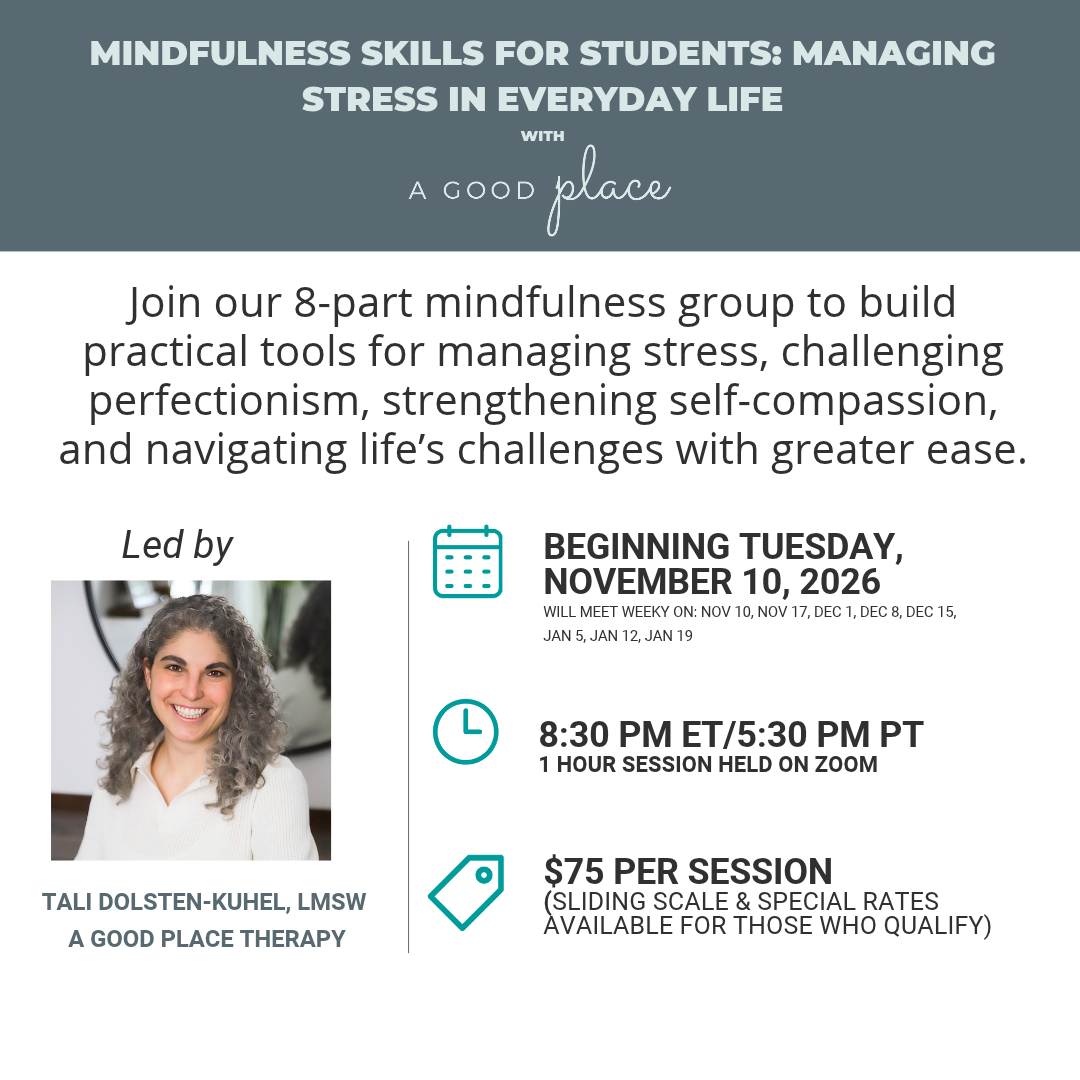
Mindfulness Skills for Students: Managing Stress in Everyday Life
Why Mindfulness?
We all know life can be stressful. Even if we can’t control the ebbs and flows of stress, what if we could have more tools in our toolbox to handle challenging situations?
In this 8 part series, we will gather to discuss and practice mindfulness skills. Mindfulness goes beyond meditation and attentive breathing exercises. This group rests on a definition of mindfulness that involves learning and practicing a skillful way of responding to life that can be helpful for a range of situations. For example, mindfulness can help in navigating tough conversations with friends, enjoying the end of a weekend when the “Sunday Scaries” rolls around, or even handling dating and relationships with more ease.
Together, we will learn proven methods for slowing down, challenging perfectionism and strengthening the muscle of self-compassion. The group format is especially meaningful for such work, since mindfulness requires effort. Having the support of peers similarly working to integrate mindfulness into their daily lives with intention can provide meaningful support.
This group will be led by Tali Dolsten-Kuhel LMSW. Tali is a psychotherapist and mindfulness educator, with experience teaching mindfulness to masters level students at The University of Michigan, and staff, faculty and students at Columbia University Climate School.
The group is best for people:
Who can be hard on themselves, but are open to self-compassion
Who are willing to try something new
Who want to have a deeper understanding of their feelings and values
Who are able to sit with uncomfortable emotions
Each session will focus on a specific topic and skill in mindfulness. These include:
Defining mindfulness and why it matters to you specifically
Practicing mindfulness with somatically informed exercises
Learning techniques for increasing self-awareness and overall comfort
Inviting more self-kindness instead of criticizing ourselves when we do slow down
Reflecting on our values and what we want to do with our more mindful self
Accepting imperfection, setbacks, and frustrations because no one is perfect
Reviewing what we’ve learned and practiced together
Setting realistic goals for bringing mindfulness into daily life
See More News